
How to Tie the Double Overhand Stopper Knot
The Double Overhand Stopper
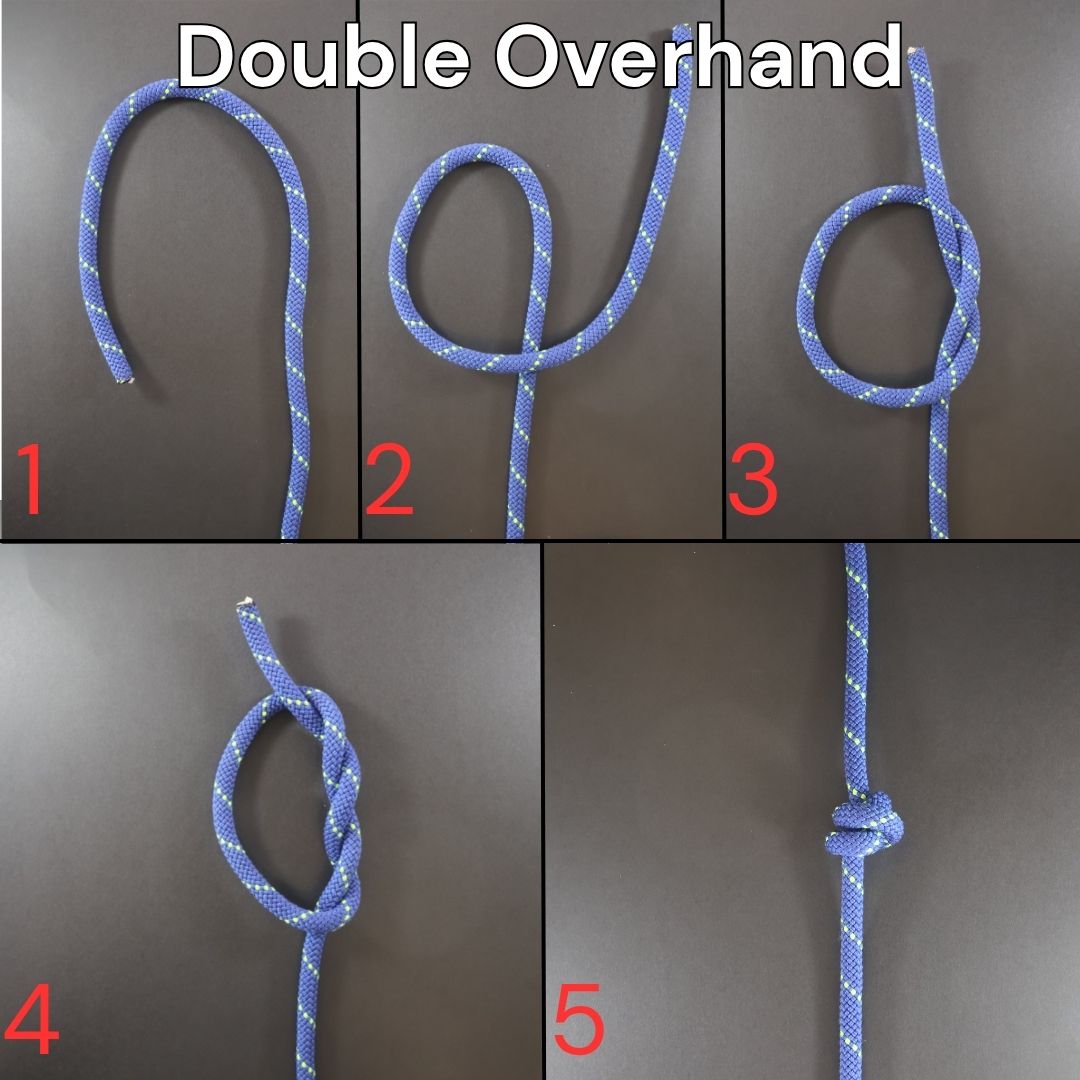
The Double Overhand Stopper Knot is a simple and effective knot used to create a secure stopper at the end of a rope. It is formed by tying an overhand knot and then passing the working end through a second time, creating a bulkier and more secure knot than the standard overhand stopper. Its primary purpose is to prevent ropes from slipping through holes, hardware, or other knots under load.
Double Overhand Instructions
Today, the Double Overhand Stopper Knot is commonly used in climbing, sailing, fishing, and general rope work where a reliable end-stop is needed. It is often found at the ends of ropes to prevent accidental unthreading through carabiners, pulleys, or eyelets. Its simplicity and effectiveness make it one of the most widely used basic stopper knots across many rope-related activities.
Key Considerations
When tying the Double Overhand Stopper Knot, it is important to leave enough tail length before and after tying the knot to ensure it cannot pull through under tension. A properly dressed and tightened knot will seat firmly and become more secure when loaded. However, insufficient dressing reduces its effectiveness and increases the risk of slippage in high-load situations.
Advantages & Disadvantages
One of the key advantages of the Double Overhand Stopper Knot is its simplicity and reliability, as it is quick to tie and provides a significant increase in holding power compared to a single overhand knot. However, its main disadvantage is that it can become very tight and difficult to untie after being heavily loaded, and it is also bulkier than other stopper knots, which may be a limitation in situations where compactness is important.
ABOK #516 - Double Overhand
Ashley’s Book of Knots describes the Double Overhand Stopper Knot as: “The Double Overhand Knot is called a Blood Knot when used on a cat-o’-nine-tails, or on the snapper of an ox whip.”
Disclaimer
The information on this website is provided for educational and informational purposes only. While every effort has been made to ensure accuracy, knot strength, security, and suitability can vary depending on rope type, condition, load, environmental factors, and how the knot is tied. Users are responsible for inspecting their equipment and verifying that a knot is appropriate for their intended use. Do not rely solely on the information provided here for activities involving personal safety, life support, climbing, rescue operations, heavy lifting, or other high-risk applications.
SCB Media Group assumes no responsibility or liability for any injury, loss, damage, or consequences resulting from the use or misuse of the knots and techniques described. Always seek professional instruction and follow applicable safety standards where appropriate.
More Stopper Knots
Figure Eight Stopper
Ashley Stopper
E-Star Stopper
Stevedore Stopper
Rope Knot Categories
- Stopper Knots
- Hitch Knots
- Loop Knots
- Bend Knots
- Binding Knots
Fishing Knot Categories