
How to Tie the Siberian Hitch
The Siberian Hitch
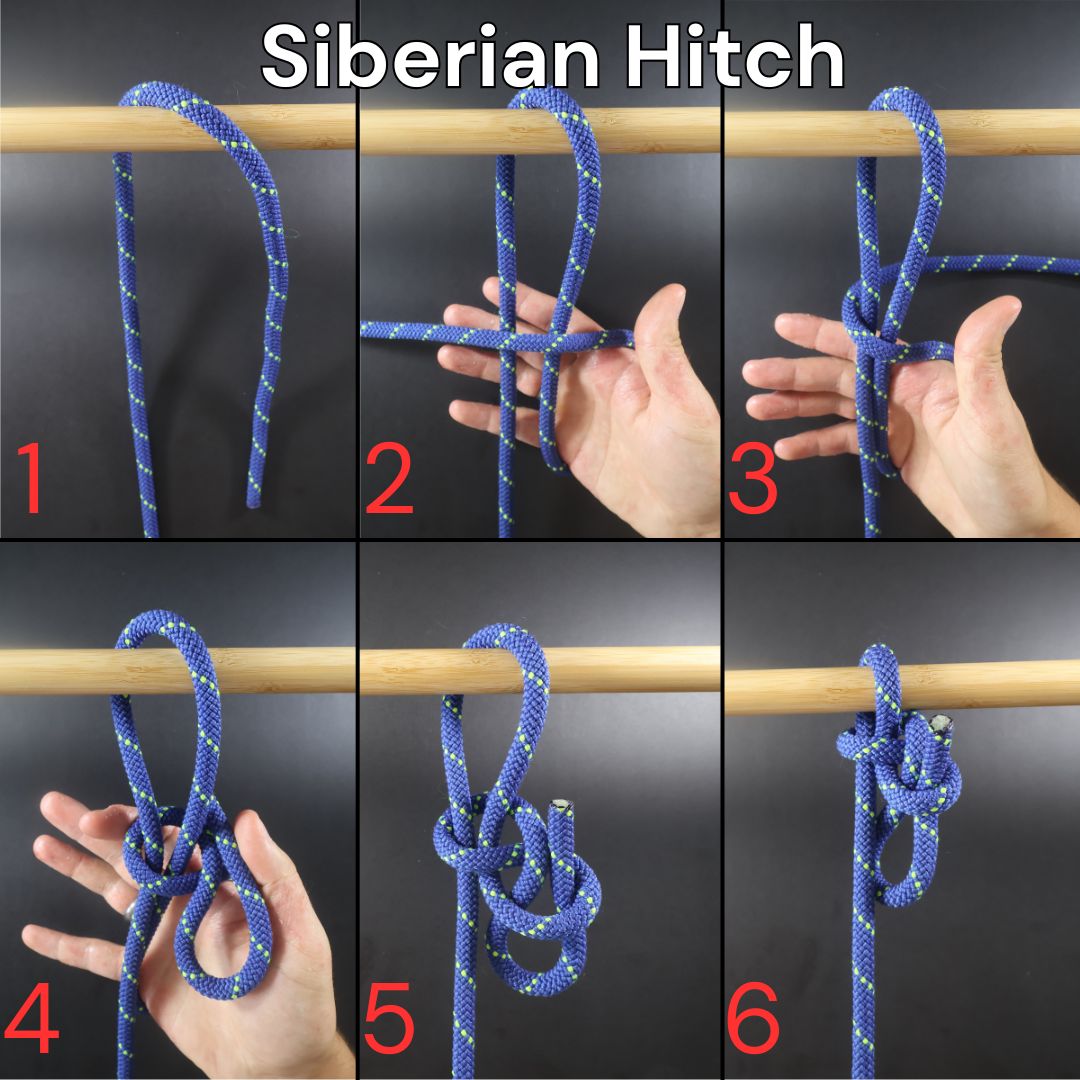
The Siberian Hitch is a quick-release knot used to temporarily secure a rope to a post, ring, or anchor point. It is particularly valued in cold-weather and survival situations because it can be tied and released quickly, even while wearing gloves. The hitch is formed by creating a loop and locking it with a bight, allowing it to hold under tension while still being easy to release when needed.
Siberian Hitch Instructions
Today, the Siberian Hitch is commonly taught in bushcraft, camping, and winter survival skills due to its speed and practicality. Its combination of simplicity and rapid release makes it useful in situations where hands may be cold or dexterity is limited by mitts or gloves. While not as widely used in formal sailing or climbing environments, it remains a trusted utility knot in outdoor survival contexts.
Key Considerations
Leaving an adequate tag end when tying the Siberian Hitch is important for safety. A tail of 12 to 18 inches is generally recommended to help prevent accidental slippage, especially when the rope is under tension or in motion. Ensuring the knot is properly dressed and tightened also improves its reliability in real-world conditions.
Advantages & Disadvantages
One of the key advantages of the Siberian Hitch is its extremely fast release, even after being loaded, making it highly practical in cold weather or emergencies. It allows a user to secure equipment quickly without complex knot tying, sometimes even while wearing big mitts or gloves. However, its main drawback is that it is not as secure or load-bearing as more permanent hitches, and it is generally not recommended for long-term or high-stress applications where a more stable knot would be preferred.
Disclaimer
The information on this website is provided for educational and informational purposes only. While every effort has been made to ensure accuracy, knot strength, security, and suitability can vary depending on rope type, condition, load, environmental factors, and how the knot is tied. Users are responsible for inspecting their equipment and verifying that a knot is appropriate for their intended use. Do not rely solely on the information provided here for activities involving personal safety, life support, climbing, rescue operations, heavy lifting, or other high-risk applications.
SCB Media Group assumes no responsibility or liability for any injury, loss, damage, or consequences resulting from the use or misuse of the knots and techniques described. Always seek professional instruction and follow applicable safety standards where appropriate.
Halter Hitch
Rolling Hitch
Anchor Hitch
Highwayman's Hitch
Rope Knot Categories
- Stopper Knots
- Hitch Knots
- Loop Knots
- Bend Knots
- Binding Knots
Fishing Knot Categories